
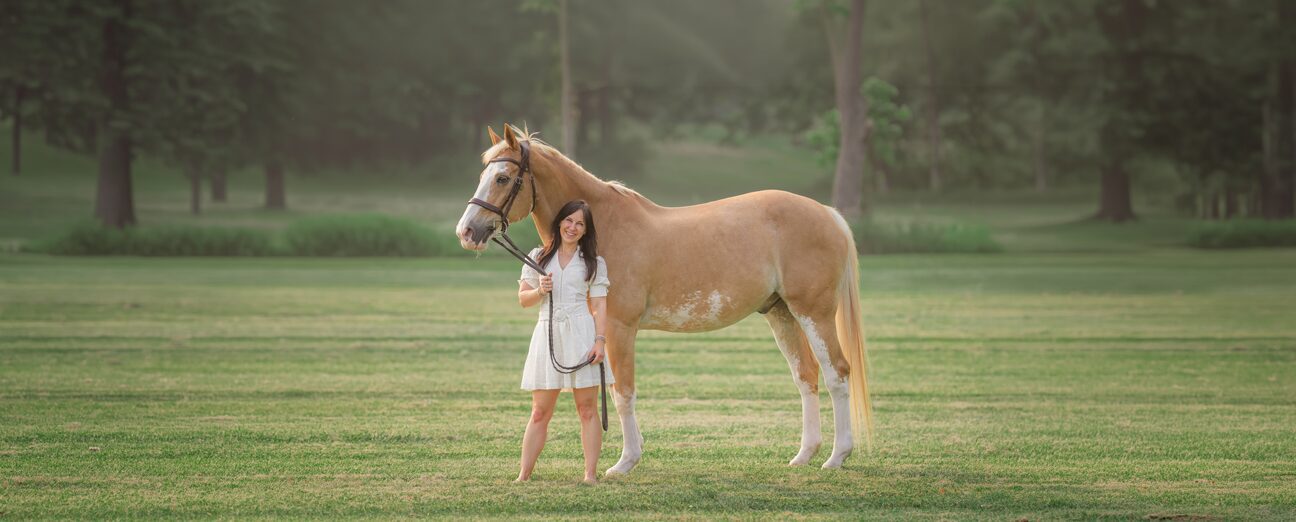
Jessica Paquette can call a race in real time at speeds most people can barely track. She can name every horse on the card, clock a fraction of a second, and keep a grandstand full of people hanging on her voice. What she couldn’t do, when her horse Emilio got hurt last year and the show season they’d been building toward evaporated, was figure out what came next.
“It was kind of like an existential moment,” she says. “What do I want this next part of my equestrian experience to look like?”
The answer: a microphone.
Paquette is the only female Thoroughbred race caller in North America, announcing at Parx Racetrack in Bensalem, Pennsylvania. She has been in the horse racing industry long enough to have been the public face of a racetrack on one of its worst days: the kind of day where you give the sound bites and keep your composure in front of the cameras, and then, once the reporters leave, you go find a horse to sit with. Off the track, she is something the racing world rarely accounts for: an adult amateur, doing it for love, with three horses of her own.
The podcast she launched out of that uncertain moment is called Amateur Hour with Jessica Paquette. “I love horse showing,” she says, “but I view it as a vacation with my best friend, which is my horse—not anything else. That attitude does not really fit with a lot of these programs.”
It fits a lot of riders, though. The adult amateur who goes to local shows once a year, or not at all. The one who is still figuring out what her equestrian life looks like after an injury, a barn change, a horse who can’t do what he used to. The one who loves horses as horses, not as equipment —and who is starting to notice how rarely that version of the story gets told.
Amateur Hour launched in March 2026 and releases new episodes every Monday. The show covers ground that most equestrian media doesn’t: the real economics of the sport, the client/trainer dynamic, what it takes to report bad behavior at a show, how to rebuild confidence after a setback. Guests range from USEF officials and A-circuit trainers to working amateurs who are still figuring it out.
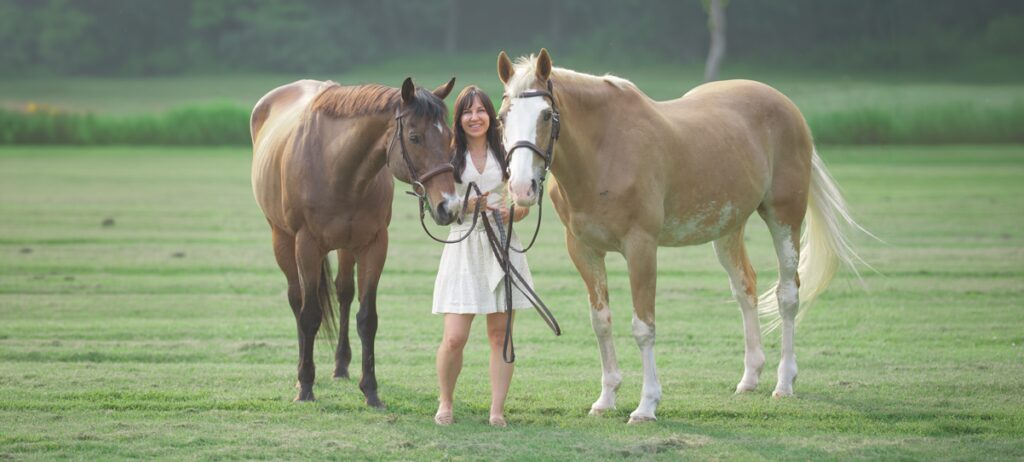
Paquette knows that feeling well. She has three horses of her own: a geriatric hunter, a jumper coming back from injury, and a retired racehorse she promised a home to years before she could afford one. Trippi, her 22-year-old hunter, has been hers for 16 years. He is, by her account, an animal with a formidable sense of self and an equally formidable sense of humor. They still take lessons together. They walk and trot. He still teaches her things.
“Everything I am as a horse person is because of him,” she says. “He doesn’t owe me a single thing.”
Then there is Emilio, whose injury sent her searching for something new, and whose story is also a quiet indictment of that culture. It made her reevaluate how she wanted to do horses and understand the ways in which she can be a better advocate for them.
And then there is Puget Sound: the third horse, the one she made a promise to years ago in a stall at Suffolk Downs on the day the casino decision came down and her racetrack’s future went dark. She kept that promise across years and state lines and a pandemic, pulling him off a trailer in the early days of COVID with a bone-on-bone ankle and untreated EPM, and settling him into what has become a very comfortable retirement at her best friend’s farm in New Hampshire.
She didn’t start the podcast to talk about any of this, exactly. She started it because she needed somewhere to work through what equestrian life looks like when the plan changes, and because she suspected she wasn’t the only one asking. She was correct.
“The horse industry doesn’t exist without the amateur,” she says, “and I’m kind of tired of being overlooked and not having our stories told.”
Amateur Hour with Jessica Paquette drops every Monday wherever you listen to podcasts.
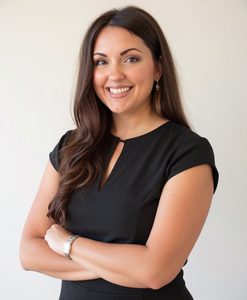
BLAIR BUSH is the founder and editor-in-chief of Modern Amateur Magazine. A lifelong horse person with a roundabout path to get here, she grew up riding gaited horses, stepped away from the sport for nearly two decades and returned at 33 with a switch to English riding. A brief detour through the hunter ring eventually led her to eventing, where she found her people. She is currently focused on dressage and working toward her USDF Bronze Medal—which, she will tell you, is a five-year plan and not a suggestion. She is based in Atlanta, Georgia.

