
The Incredible True Story of the Riders Who Put Their Stories Into PS of Sweden’s Most Personal Collection Yet
There is a Facebook group called PS of Sweden Unicorns, and if you know, you know. It is a resale group, technically: a place to buy, sell, and trade pieces from a Swedish tack brand that makes saddle pads, matching sets, and accessories in colorwayst hat have inspired what can only be described as a devoted collector culture. If you have ever paid more than you would like to admit for a secondhand saddle pad, the Unicorns group may already be a significant part of your life. If you have not, the existence of this group and the passion behind it will tell you something true about what PS of Sweden means to the people who love it.
The group was founded by Megan Gaunt, who has been in this world long enough to know exactly which colors drive people to set alarms, and whose years of community building, direct feedback, and relationship with the brand ultimately opened a door that three other women were able to walk through. Amanda Pope was on the other side of that door: a collector who came back to horses after a 20-year absence and discovered, to her own amusement, that the matchy-set era was entirely her era. So was Elena Fields, who started buying pieces in 2021, the same year she brought home her Westphalian mare LuLu and who has since become the kind of collector who can tell you exactly what makes a PS of Sweden polo wrap different from anything else on the market. And Crystal Wilcox, who came to the brand in 2023 and was taught most of what she knows by Amanda herself. This is how these things tend to work in a community built on the shared, slightly obsessive love of the same thing.
All four of them are devoted collectors. All four of them understand the PS of Sweden catalog the way most people understand their own wardrobes: intuitively, emotionally, and with strong opinions about what belongs and what doesn’t. This past year, they each designed saddle pads for PS of Sweden’s The Original Monogram collection, choosing not only the color but the quote stitched into the spine. This line of text would travel out into the world on the back of every pad sold, carried by riders who now can know the story behind it.
The Recipe
To understand what all this means, you need a little context about the brand. PS of Sweden was founded by Karen Uro, who started by making browbands by hand; soon halters, bridles, coolers, and pads joined the collection. The early pieces were bespoke in the way that small, careful, one-person operations tend to be, and collectors sought them out and held onto them, which was ultimately reflected in the resale prices. When Uro sold the company in 2021, she stayed through 2022 to help guide the transition. The years that followed were a recalibration: new ownership, new leadership, and the kind of growing pains that come with rebuilding something that had meant a great deal to a great many people.
None of this was lost on the women in the Unicorns group, who gave specific, honest feedback: the wither pad foam didn’t fill the pad like it used to; the colors had gone soft when they should have stayed vibrant; the brand that once made you feel like you were getting something rare was evolving in ways that didn’t always land with longtime collectors.
What PS of Sweden did with that feedback, eventually, was reach out to Megan. Representatives of the brand had been in the group. They had seen the resale prices on older pieces and the passionate response to the earliest releases, and they wanted to understand what made those collections resonate so deeply. Megan contacted Amanda. Amanda brought in Crystal and Elena. And from there, over the course of roughly a year, they worked together on the newest community-inspired collection.
BUILDING THE COLLECTION
The color process began with the brand sharing a palette for consideration. The collaborators assessed it, appreciated the gesture, and then went in an entirely different direction.
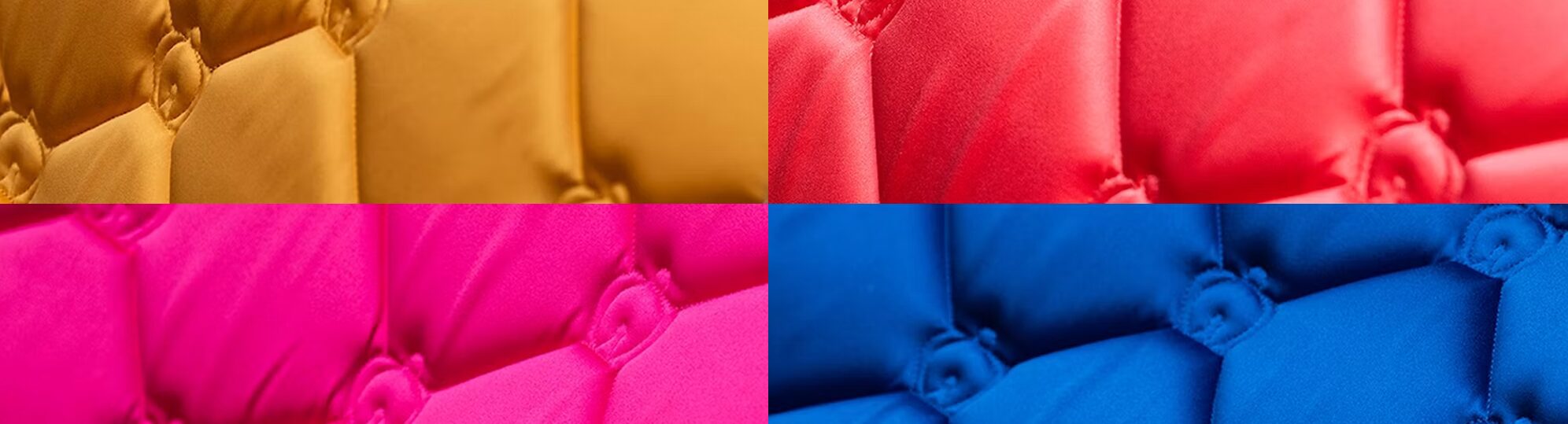
They built a group chat. They sent screenshots. They made collages of color options and tweaked them until all four worked together as a set, a collection that could stand alone or hang side by side in a tack room and feel intentional. There were priorities, and they were non-negotiable: a hot pink, because the original Monogram Azalea was beloved in a way that twenty years of new releases hadn’t touched, and someone needed to honor that. A sapphire blue, because that’s Amanda’s color, and has been since before she had a word for why. A yellow, because PS of Sweden had never done a yellow quite like this one, bright and uncompromising, and Crystal was willing to set aside her signature purple to give people something they didn’t know they were missing. And a warm coral for Elena, who had been spending quiet afternoons in the barn with LuLu, putting polo wraps on her legs while she fell asleep in the crossties, learning, slowly, what a horse could mean to you when you weren’t riding her.
When it came time for the quotes, the collaborators each went looking on their own. They had submitted ideas earlier in the process thinking PS of Sweden would choose from a list. Instead, they were given complete latitude, and what each woman chose reflected not just her colorway but the specific texture of her life with horses at that moment in time.
LET’S DANCE
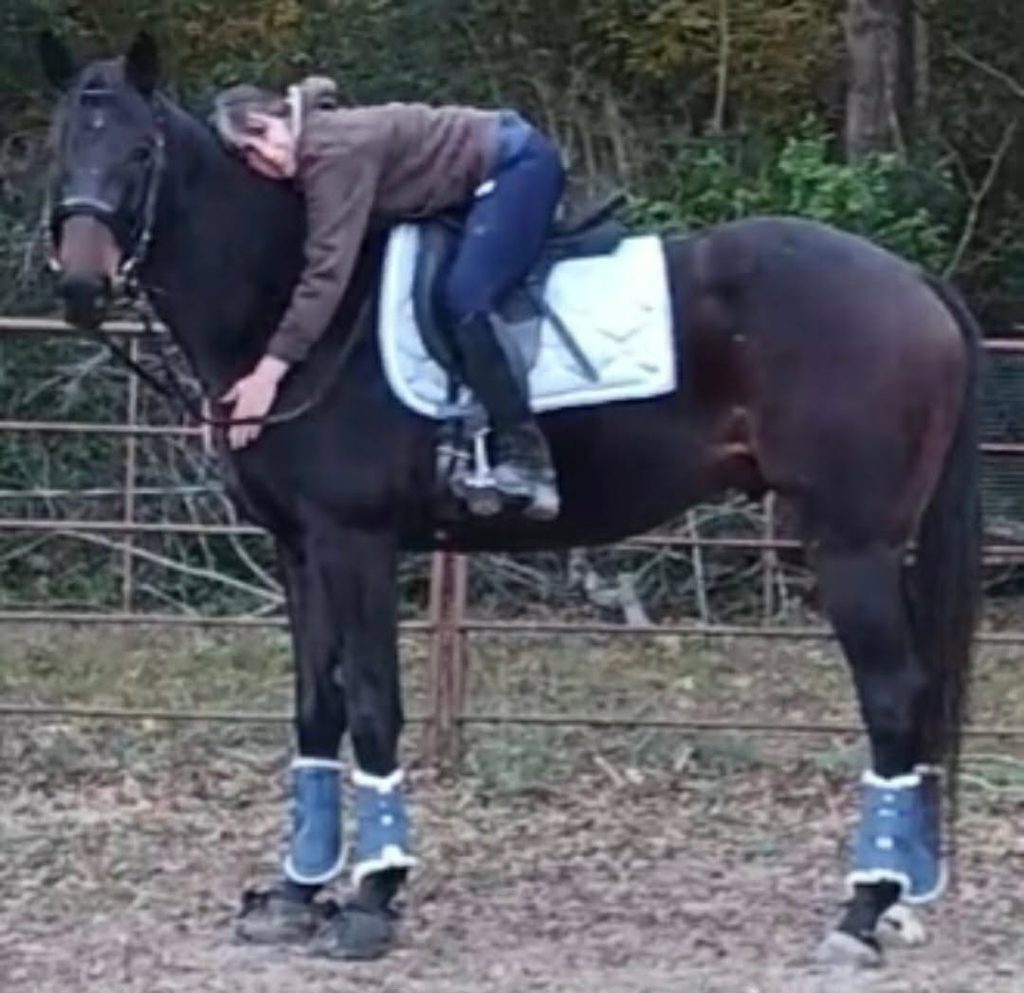
Amanda’s quote is “Let’s Dance.” She came back to horses the way a lot of us do: quietly, after a long time away, because life felt incomplete without them. Twenty years had passed since she’d last ridden regularly. She had spent those years as an ER nurse, working in one of the most demanding, high-stakes environments in medicine, and somewhere along the way the horses fell away. Not dramatically. Just gradually, the way things do when life fills in the gaps.
When she came back, she made a promise to her husband: no jumping. A past injury had made that a reasonable concession, and she was willing to make it. Which meant that dressage, the discipline she had found hopelessly boring as a kid, was suddenly the only game in town. She had a specific memory of herself at eleven years old, eyes rolling through a dressage test on a pony, the kind of memory that made her laugh at her own younger self. Twenty years later, she was back in a dressage arena, and she was obsessed.
She bought a horse. Then she bought a baby horse named Luke. Her husband, trying to explain what Luke meant to her, reached for the most honest comparison he had: his fishing boat. Not a fancy one, just a boat he can take out on the lake. The boat is his, in the particular way that some things are just yours, and Luke, he said, is hers. It was the right metaphor. She knew it the moment he said it.
Dressage, it turns out, is not boring. It is, she will tell you, extraordinarily hard. But she is learning to love the hard parts, and “Let’s Dance” arrived fully formed before she had finished forming the thought. It was just immediately apparent. She didn’t have to workshop it.
TWO HEARTS BEATING AS ONE
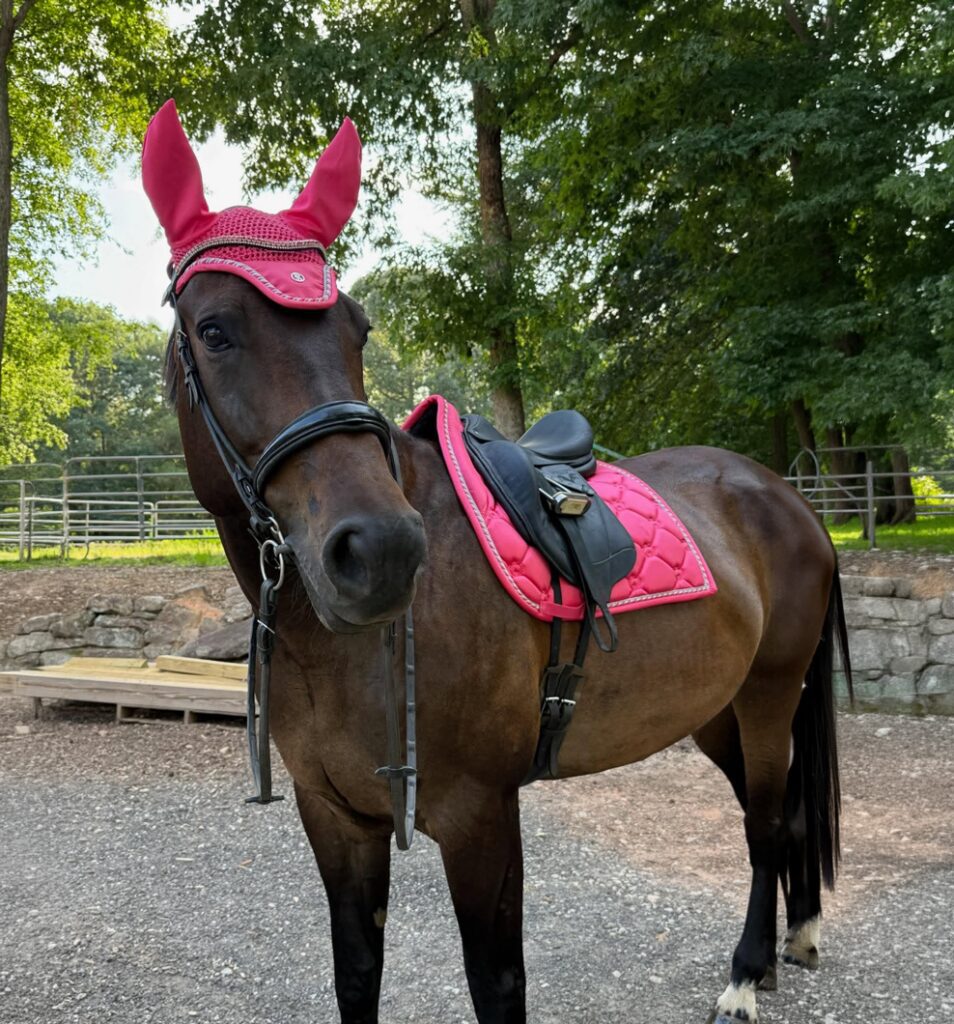
Elena’s quote is “Two Hearts Beating As One.” She bought LuLu in 2021 with all the plans you make when you finally have your own horse: the training, the partnership, the slow accumulation of something great. LuLu was young and willing and full of potential. And then she went lame. Not long after Elena brought her home, it became clear that something was wrong, the result of being worked too hard by a trainer who hadn’t understood her. The diagnostics took time. The prognosis required patience. And the riding plan went on hold indefinitely.
What Elena did during that time, and what ended up meaning more than she expected, was showing up anyway. She bought things for LuLu. She groomed her. She learned which parts of LuLu’s body she didn’t like being touched and which ones made her close her eyes and lean in. She discovered that LuLu loved having her legs brushed, loved having polo wraps put on, would practically fall asleep in the crossties while Elena worked. Those quiet afternoons, the ones that had no purpose beyond presence, were when Elena fell in love with her horse.
She organized a photo shoot at the barn: brought all her PS of Sweden pieces out, invited other boarders whose horses were also on rest, made an afternoon of it. A friend of hers had an older Arabian who couldn’t be ridden anymore but loved to be groomed and dressed up. They spent the day doing exactly that, just being with their horses in the particular, unhurried way that lameness recovery demands. It was, Elena says, therapeutic, not just for her and LuLu but for everyone who showed up.
LuLu is fine now. She’s been fine for a while. But Elena still reads her the quote before putting the pad on her back before a ride. She holds it up. LuLu looks at it. Elena says she can tell she’s listening.
CHERISH EVERY MOMENT
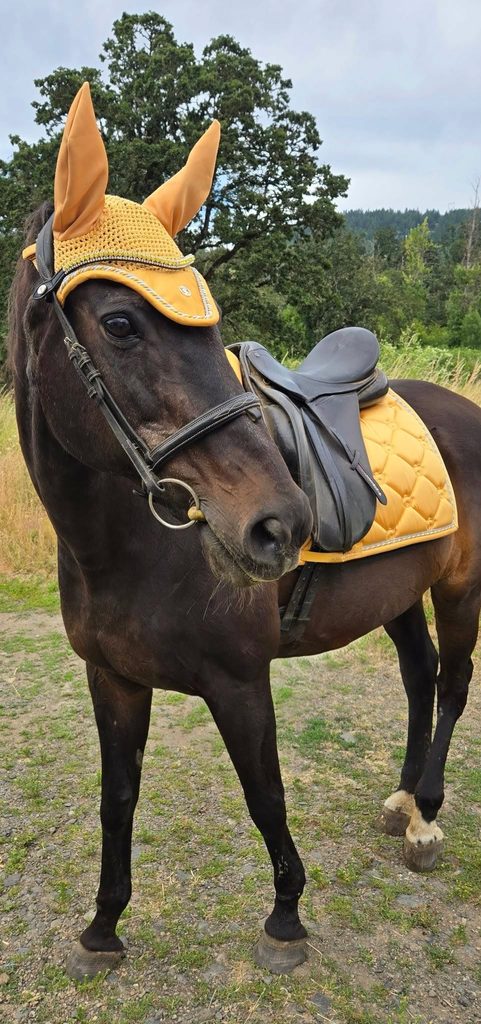
Crystal’s quote is “Cherish Every Moment.” Her horse Belle is 27 years old. They have been together for 13 of them. Belle came to Crystal the way a lot of heart horses do: through a chain of connections that in retrospect looks like inevitability, but in the moment looked like chance. Crystal had wanted horses her whole life. Her parents never sprung for lessons; instead she grew up trail riding at summer camp once a year, standing next to friends’ horses and being told she couldn’t ride them, petting them occasionally and calling it enough when it wasn’t. When she was finally in a financial position to do something about it, she started leasing a horse and taking lessons at an eventing barn. One of her closest friends was the reason she ended up there. That same friend eventually connected her with Belle.
Belle was an off-the-track Thoroughbred, and she was, by any honest measure, too much horse for where Crystal was at the time. Even at 27, Belle still carries herself like she’s six: opinionated, energetic, not entirely convinced the world isn’t going to ask something of her at any moment. Crystal was not ready for her. Crystal and Belle were ready for each other, which is a different thing, and they grew up together inside that distinction.
“You sink or swim,” Crystal says, “and we swam.”
She was thinking about Belle’s age during the collaboration: the specific, quiet weight of realizing that the time you have with a horse is finite, and that you are closer to the end of it than the beginning. The quote came from that reckoning, from a conversation she was having with herself about what it means to really be present with an animal who has been your partner for over a decade. Every ride. Every quiet moment in the field. Every morning she walks out and Belle raises her head and nickers.
When the pads finally arrived, Belle had developed severe cellulitis. She wasn’t fit to ride, and the recovery was slow: six weeks of careful management before she was herself again. But the pads were there, and they were beautiful, and Crystal did what you do when you can’t do anything else. She dressed her up. She took the teaser photo for the collection with Belle standing squarely in the pad, her leg still slightly swollen, looking directly at the camera with an expression that could only be described as cooperative. “When you can’t do anything else,” Crystal says, “you dress your horse.”
SUCCESS IS A JOURNEY, NOT A DESTINATION
Megan’s color is called Hot Hibiscus, and it sold out faster than anything PS of Sweden had moved in years. This was not an accident.
Megan has seven horses, all at home, and she will tell you she doesn’t ride as much as she used to. Her relationship with horses started the way the best ones often do: not with a lesson or a goal or a program, but with a grandmother who used to take her to feed some local horses when she was little. Standing in a field with an older woman and horses that didn’t belong to either of them. That was where it started. She got her first pony on her seventh birthday. She has never fully left.
She has been a collector since the early Monogram days, when PS of Sweden releases felt like events and the colorways felt chosen rather than produced. She built the Unicorns group because she understood what the brand meant to people, and she understood it from the inside, as a collector who had watched the early pieces become the things people searched for in resale listings with the kind of patience and determination usually reserved for something much more important. When the brand shifted, she watched it with the specific grief of someone who knew exactly what was being lost.
Hot Hibiscus was her way of going back to the beginning. The original Monogram Azalea was the colorway that defined the early days of the collection for a generation of collectors: bold, immediately recognizable, the kind of color that made you feel like you’d gotten your hands on something. Megan didn’t want to replicate it exactly. She wanted to honor it, to give it a new life without erasing what it had been. Same vibrant energy. Its own identity. A bridge between what the brand had been and what she believed, and hoped, it was becoming again. The quote she chose for her pad reflects that perspective exactly: “Success Is A Journey, Not A Destination.” For Megan, this collection was never about a single release or a sell-out moment. It was about what comes next, for the brand and for the community that never stopped believing in it.
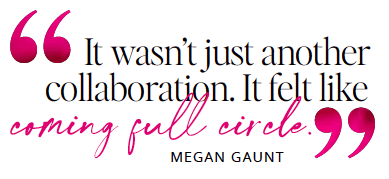
“It wasn’t just another collaboration,” she says. “It felt like coming full circle.”
When the collection was released and the photos started appearing, horses wearing something she had helped design out in the world, ridden and groomed and cared for by people who had no idea who she was, she says it was surreal. She hopes people see the collection as a celebration of the community that has kept this brand alive through its quieter years. She hopes they understand that behind every colorway is a real story, a real person, a real horse. She would know. She built the room where those stories get told.
THE BEGINNING OF A GOLDEN ERA
This creative group was very specific with PS of Sweden about what they wanted. The wither pad needed to be softer, more moldable, the way the older Monograms had been. The Synthermax lining needed to breathe, especially for riders in Georgia, Texas, and other places where summer is not a metaphor. They pushed for the kind of quality that drives scarcity, not the kind of production volume that trains customers to wait for the sale. They wanted people to need to set alarms again, to feel that particular urgency of a release that might be gone before you finish your morning coffee.
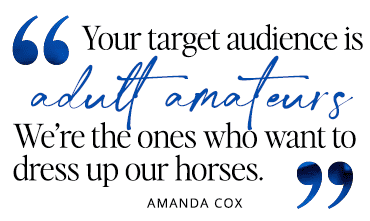
“Your target audience is not the professionals,” Amanda observed. “Nobody cares what they’re wearing. Your target audience is amateurs. Adult amateurs. We’re the ones who want to dress up our horses.” The broader equestrian industry has been slow to arrive at this understanding. Brands still run surveys asking amateur riders which professional athletes inspire them, missing entirely that for most of us, inspiration looks like a barn friend who kept riding through a hard year, or a trainer who told you the truth when it would have been easier not to. The stories that actually matter to us are not the ones at the top of the sport. They’re the ones in the crossties on a Tuesday morning.
These four women know that. And when PS of Sweden handed them a rare and unusual thing, a chance to make something that was genuinely theirs, they reached back into the most honest parts of their lives with horses and pulled out what was there: a nurse who found her boat. A woman who learned to love her horse in the absence of riding her. A rider reckoning quietly with borrowed time. A collector who remembered what it felt like to want something that might not be there if you waited.
Hot Hibiscus, Pink Guava, Sapphire Crush, Sunburst Sorbet. Four colors, four quotes, four women who understood the assignment better than anyone could have anticipated. They are out there now, on horses in arenas and on trails and in fields, worn by riders who will know the stories stitched into the spines. The amateur rider has always had something worth saying; she’s just rarely been asked. Consider this a beginning.
THE PS OF SWEDEN ORIGINAL MONOGRAM COLLECTION IS AVAILABLE AT PSOFSWEDEN.COM
THIS ARTICLE IS NOT SPONSORED OR AFFILIATED WITH PS OF SWEDEN®

BLAIR BUSH is the founder and editor-in-chief of Modern Amateur Magazine. A lifelong horse person with a roundabout path to get here, she grew up riding gaited horses, stepped away from the sport for nearly two decades and returned at 33 with a switch to English riding. A brief detour through the hunter ring eventually led her to eventing, where she found her people. She is currently focused on dressage and working toward her USDF Bronze Medal—which, she will tell you, is a five-year plan and not a suggestion. She is based in Atlanta, Georgia.

